
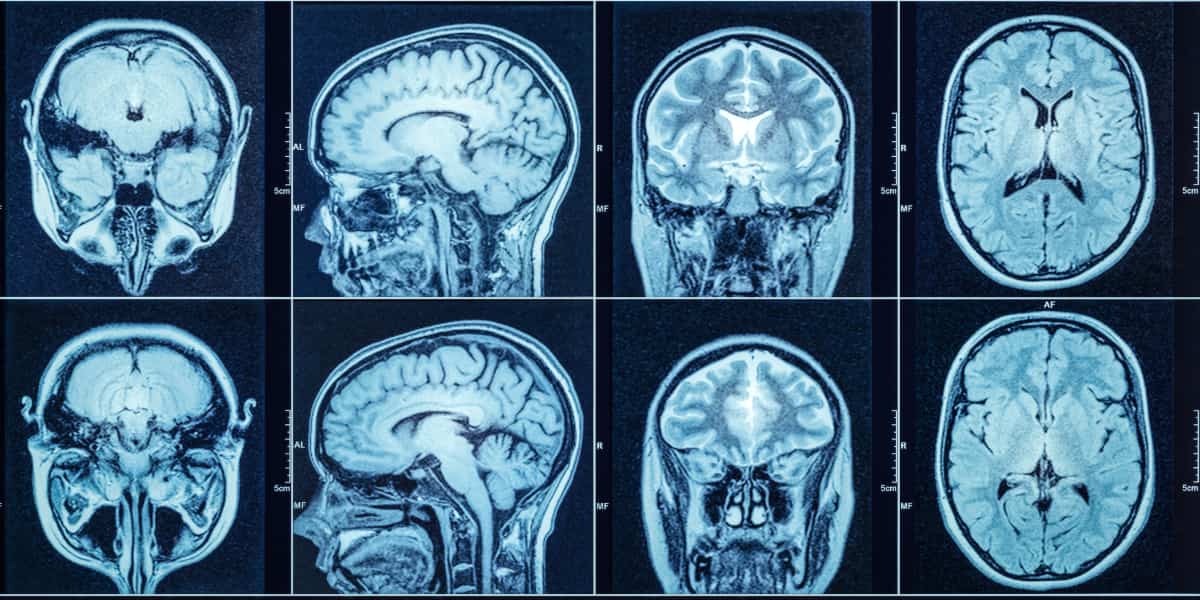
Car accidents leave victims shocked, confused, and with spiked adrenaline. The primary concern after an accident is to address visible injuries and seek medical care immediately. However, as the adrenaline wanes, the extent of the injuries begins to surface. Getting an MRI after a car accident is a key step in figuring out your injuries so that you can begin your path to recovery.
An ER doctor will usually start with an X-ray or a CT scan. These tests are fast and help rule out life-threatening injuries. However, an MRI (Magnetic Resonance Imaging) is often the most important tool for detecting hidden damage.
Knowing when you need an MRI matters. It can provide “objective evidence” of injury. This evidence can make the difference between a denied insurance claim and a successful settlement.
The Diagnostic Chain: X-Ray vs. CT Scan vs. MRI
Medical imaging varies and the distinctions between an X-ray, CT scan, and MRI are important.
X-Rays: The Quick Look
In the Emergency Room, an X-ray is almost always the first step. It is fast and effective at identifying bone fractures and dislocations. X-rays cannot see soft tissue: the muscles, ligaments, tendons, and nerves that are most commonly injured in car accidents. A “clean” X-ray does not mean you are uninjured; it simply means your bones aren’t broken. Doctors often order an X-ray after a car accident to rule out broken bones and fractures.
CT Scan After a Car Accident: The Emergency Lifesaver
A CT scan after a car accident is critical to perform life-saving treatments and care. A CT (Computed Tomography) scan is really a series of X-rays taken from different angles and combined by a computer. In a trauma center, a CT scan is used to check for life-threatening emergencies, such as:
- Brain bleeds (hemorrhages)
- Skull fractures
- Internal organ damage
- Major spinal trauma
Because CT scans are fast, they are perfect for the ER. However, like X-rays, they often lack the detail necessary to see the soft tissue injuries that cause chronic pain and discomfort.
MRI: The Gold Standard for Soft Tissue
Unlike the others, an MRI uses powerful magnets and radio waves, not radiation, to generate highly detailed images of the body’s internal structures. An MRI is usually an outpatient test that is ordered by your primary care doctor. An MRI is the only way to clearly see:
- Herniated or bulging discs in the spine
- Torn ligaments (like an ACL or rotator cuff)
- Nerve impingement (pinched nerves)
- Deep tissue bruising and inflammation
When Is an MRI After a Car Accident Needed?
You might not be sent for an MRI on the day of your accident. In many situations, doctors prefer to wait a few days or weeks to see if symptoms resolve with rest and physical therapy. However, you should advocate for an MRI if you experience the following “red flag” symptoms:
- Radiating Pain: Pain that travels from your neck down into your arms, or from your lower back down into your legs.
- Numbness or Tingling: A “pins and needles” sensation in your extremities often indicates a nerve is being compressed by a damaged disc.
- Muscle Weakness: Difficulty with gripping objects, walking, or other general movements.
- Chronic Headaches: This could indicate a cervical spine injury or a more subtle traumatic brain injury.
- Persistent Joint Pain: If your shoulder or knee still hurts after weeks of icing and rest, a ligament tear may be present.
Many of the symptoms that call for an MRI, such as radiating leg pain or arm tingling, are associated with disc damage, and understanding the full picture of a herniated disc from a car accident can help victims recognize why prompt imaging matters for both treatment and legal documentation.
How an MRI Proves Your Legal Case
In Florida, to recover non-economic damages (pain and suffering) from the at-fault party, you must typically prove that you have sustained a permanent injury. This is where an MRI after a car accident becomes your most powerful witness.
Objective vs. Subjective Evidence
Insurance adjusters are trained to be skeptical. An MRI provides objective evidence. A radiologist’s report stating there is a bulging disc at C5-C6 is a fact. It is a physical abnormality that can be pointed to on a screen. It moves the conversation from questions about how bad something hurts to the cost of recovering from the injury.
Overcoming the “Pre-existing Condition” Defense
A common tactic used by defense attorneys in Florida is to claim that your disc herniation wasn’t caused by the car accident, but by “age-related degeneration.” This is especially true if the victim is over 30. Insurance adjusters may call the disc damage “wear and tear.”
Advanced MRI technology can often help specialists distinguish between old degeneration and acute (new) trauma. An MRI can show bone marrow edema (swelling inside the bone) or fresh inflammation around a disc, which indicates the injury is recent and directly related to the crash.
Once imaging confirms a permanent injury, the next step is connecting that finding to your full range of losses, and knowing how to prove pain and suffering damages in Florida is key to recovering compensation beyond just the medical bills.
The Financial Reality: Why MRI Timing Matters
The 14-Day Rule
Florida allows a victim up to 14 days to seek medical treatment for an injury after an accident. If you seek treatment after the 14-day window, the insurance company may deny the claim, arguing that your shoulder pain is unrelated to the crash (Florida Statute §627.736). This is why getting a CT scan after a car accident or follow-up MRI as soon as symptoms appear is so important.
Furthermore, waiting too long, like months, to get an MRI creates a “gap in treatment.” Insurance companies will argue that if you were truly hurt, you wouldn’t have waited so long for imaging. Prompt imaging connects the injury to the accident, making it much harder for the defense to distance themselves from the liability.
Understanding the Results: What the Report Means
When you receive the results from your MRI after a car accident, the language can be intimidating. Here are a few common terms you might see in an accident-related report:
- Disc Bulge: The disc is “spilling” out of its normal space but hasn’t ruptured.
- Herniation: The inner jelly-like material of the disc has pushed through the outer shell, often hitting a nerve and causing pain, muscle weakness, or tingling.
- Effusion: An abnormal buildup of fluid in a joint, signaling an acute injury.
Seeing how documented injuries like disc herniations and nerve impingement have played out in actual cases is valuable context, and real car accident settlement examples show how imaging findings directly affect what victims recover.
The Legal Strategy: Using Imaging to Negotiate
A law firm with experience in Florida car accidents uses MRI results to negotiate a fair settlement on behalf of the victim. Different imaging tests are needed to determine the extent of injuries after a car accident. While a CT scan after a car accident is usually a life-saving test to get the patient the immediate care they need, an MRI after a car accident is often an outpatient test. An MRI is more than just a medical test; it is a vital piece of evidence that bridges the gap between your physical pain and your legal right to compensation. While CT scans save lives in the ER, MRIs save legal claims by providing the undeniable truth of soft-tissue damage.
If you are experiencing persistent pain after a Florida car accident, it is critical to pursue a full diagnostic workup so you can begin your road to recovery. You do not have to navigate the medical and legal process alone. Contact us today for a free consultation to discuss your injuries, your imaging results, and your options for pursuing compensation.